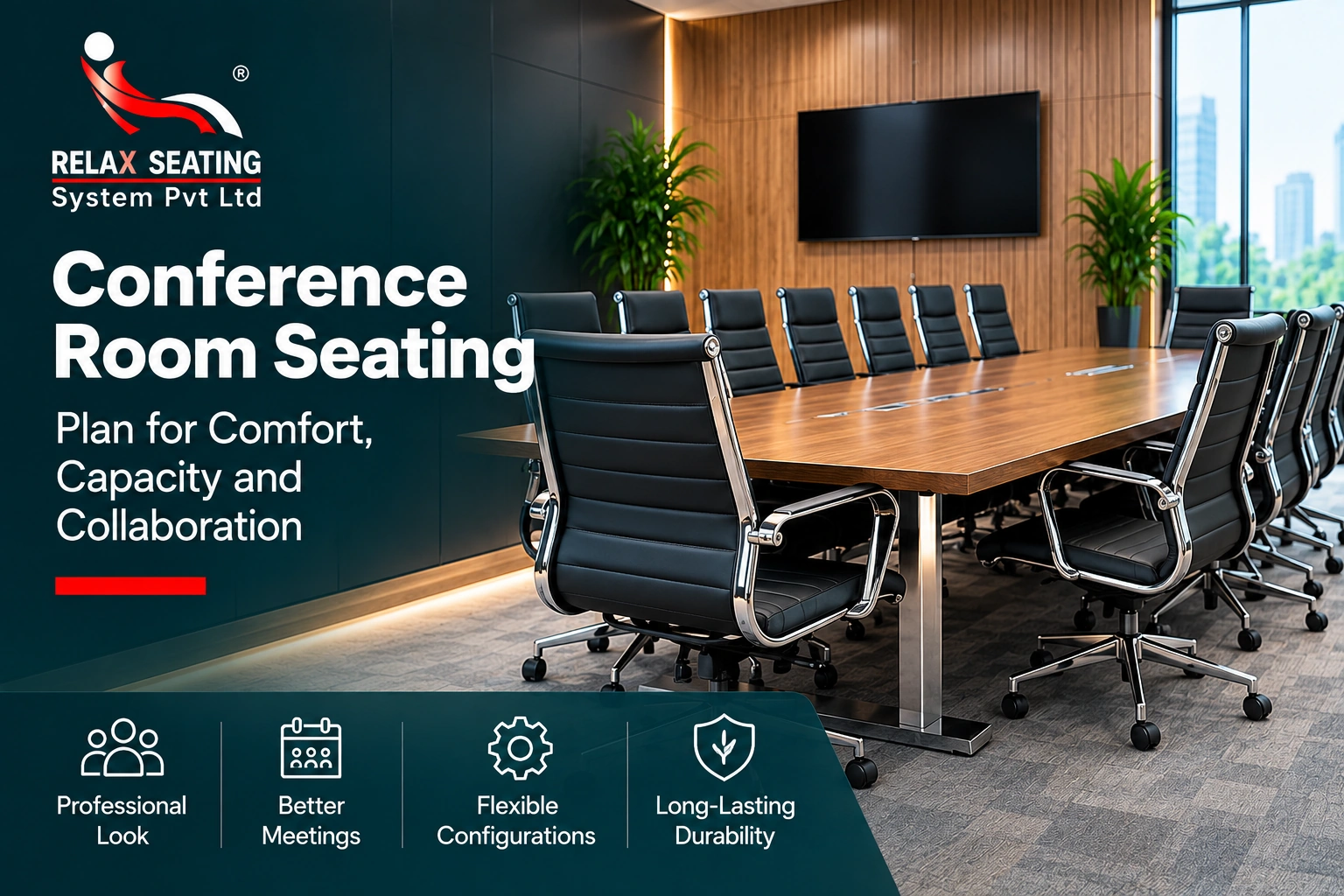
Conference Room Seating: How to Plan Comfort and Capacity
A conference room has to serve several purposes. It may be used for internal meetings, client presentations, interviews, training sessions, planning discussions, or video conferences.
Because meetings can vary considerably in length and size, choosing conference room seating requires more thought than simply counting how many chairs fit around a table.
The best conference room setup balances comfort, available space, appearance, and practical use.
Start With the Room Dimensions
Before ordering conference chairs, measure the room carefully.
The available floor area needs to accommodate more than the table and chairs. People need enough room to pull chairs out, sit down, stand up, and move around the table.
Doors, walls, cabinets, presentation equipment, and walkways should also be considered.
A room that technically fits twelve chairs may not feel comfortable if those chairs leave almost no space for movement.
Determine the Typical Meeting Size
Think about how the room is actually used.
If most meetings involve four to eight people, designing the room around the maximum possible capacity may not be the most practical approach.
A smaller number of comfortable seats can make a meeting room feel more open and professional.
On the other hand, training rooms and larger conference facilities may require a higher seating capacity.
Match the Chairs With the Table
Chair height should work with the conference table.
Users should have adequate legroom and enough clearance beneath the table. The chair should also allow people to sit comfortably while writing, typing, or participating in discussions.
This is particularly important when selecting chairs and tables from different manufacturers or product ranges.
Consider Meeting Duration
A chair that works for a ten-minute discussion may not be suitable for a two-hour meeting.
If employees or clients regularly spend extended periods in conference rooms, comfort becomes more important.
Back support, seat cushioning, appropriate dimensions, and a stable frame can all influence how comfortable the room feels during longer meetings.
Think About Movement
Conference rooms are active spaces.
People may need to turn toward a presentation screen, speak to another participant, take notes, or move in and out of the room.
Depending on the environment, chairs with appropriate mobility may be useful. However, in some formal boardrooms, fixed or more traditional conference chairs may better suit the room.
The right choice depends on how the room operates.
Consider the Visual Appearance
Conference rooms are often used when clients, suppliers, candidates, or business partners visit the company.
The furniture therefore contributes to the overall impression of the workplace.
A consistent combination of conference chairs, tables, finishes, and surrounding furniture can create a more organized appearance.
The goal isn’t necessarily to choose the most expensive furniture. Instead, the furniture should look appropriate for the company and the space.
Don’t Overcrowd the Room
One of the most common planning mistakes is trying to maximize the number of seats.
More chairs aren’t always better.
An overcrowded conference room can make it difficult for people to move around and may make meetings feel uncomfortable.
Leave enough clearance around chairs and consider how people will enter and exit the room.
Consider Technology
Modern conference rooms may include large displays, cameras, microphones, laptops, and presentation equipment.
The furniture arrangement should allow participants to see the screen comfortably and use their devices without creating unnecessary clutter.
Cable management and table design may also become important when technology is a major part of meetings.
Think About Future Requirements
Businesses change.
A company that currently holds small meetings may eventually need larger training or presentation spaces.
When selecting conference furniture, consider whether the room might need to support different meeting formats in the future.
Flexible furniture can make it easier to adapt the room.
Final Thoughts
Good conference room seating isn’t simply about buying comfortable chairs. It involves planning the entire room around the way people meet, communicate, move, and work.
Measure the space, understand the typical meeting size, consider meeting duration, coordinate the chairs with the table, and leave enough room for movement.
A well-planned conference room can be both professional and comfortable.