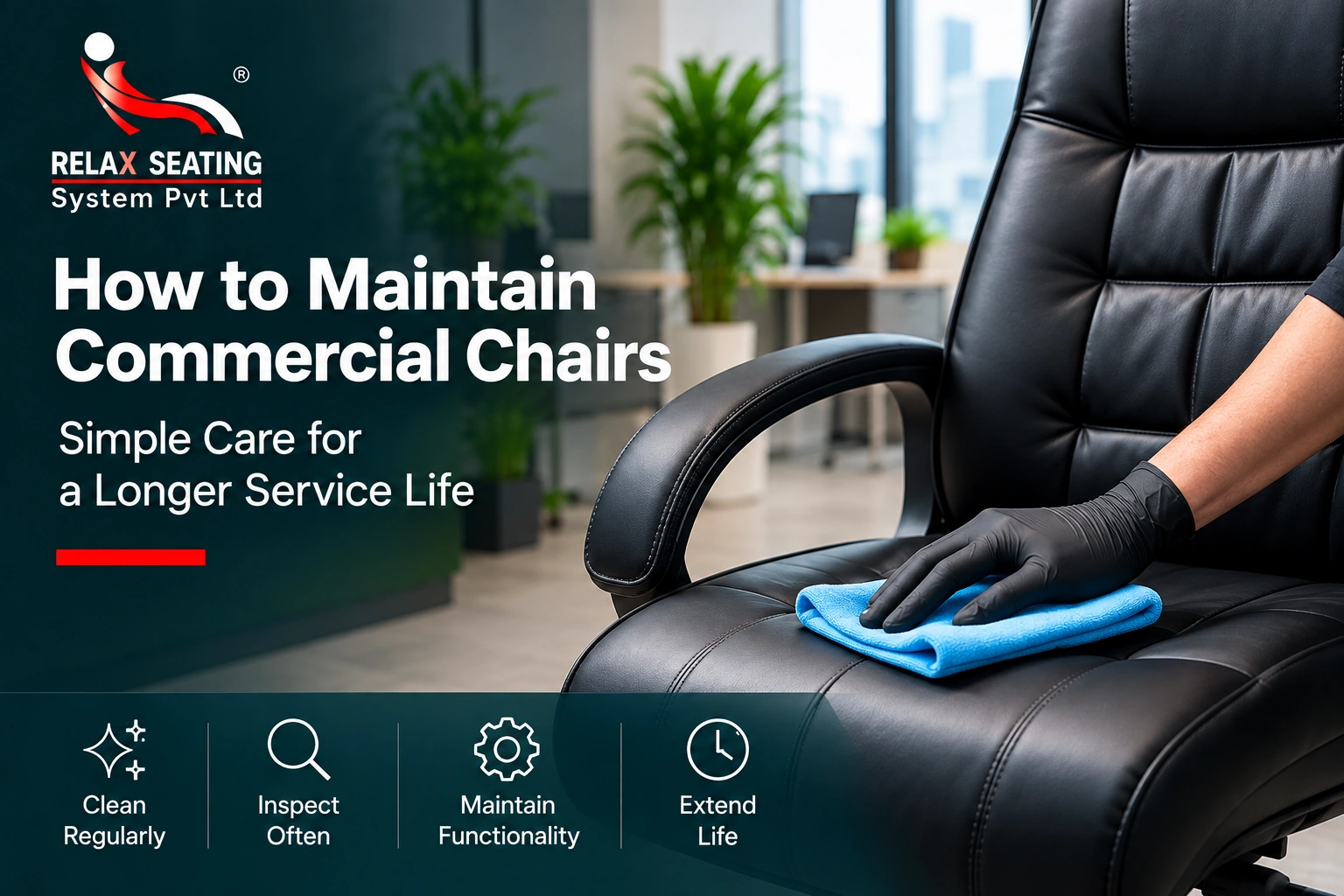
How to Maintain Commercial Chairs and Extend Their Service Life
Commercial chairs can experience considerably more use than residential furniture. In an office, restaurant, institution, waiting area, or other business environment, the same chair may be used repeatedly throughout the day.
Regular maintenance won’t eliminate normal wear, but it can help keep furniture looking presentable and identify problems before they become more serious.
Follow the Manufacturer’s Cleaning Recommendations
Different furniture materials require different cleaning methods.
Fabric, mesh, leatherette, plastic, metal, and wood finishes should not automatically be treated with the same cleaning products.
Before applying a cleaner, check the manufacturer’s recommendations for the specific material.
Using an unsuitable chemical can damage upholstery, discolor surfaces, or affect protective finishes.
Clean Regularly
Commercial furniture collects dust and dirt simply through everyday use.
A regular cleaning routine can help prevent buildup and keep chairs looking professional.
In offices, this may involve routine dusting and surface cleaning. In hospitality and food-service environments, cleaning may need to occur much more frequently because of spills and food contact.
Deal With Spills Promptly
Spills become harder to remove when they are allowed to remain on a surface for an extended period.
When a spill occurs, follow the appropriate cleaning procedure for the upholstery or material involved.
Avoid aggressive scrubbing unless the manufacturer specifically recommends it. Excessive rubbing can sometimes damage the surface or spread a stain.
Inspect Moving Components
Many commercial chairs contain moving or adjustable components.
Depending on the chair, these may include wheels, height mechanisms, reclining systems, armrests, or other hardware.
Periodic inspection can help identify unusual movement, looseness, or damage.
If something no longer operates as intended, it is better to investigate the issue rather than continue using the chair indefinitely.
Check Frames and Fasteners
Businesses should periodically inspect chairs for loose screws, damaged frames, cracked components, or other structural problems.
This is particularly important in environments where furniture is heavily used.
A maintenance program can help facilities identify chairs that require attention before they become unsuitable for everyday use.
Avoid Improper Use
Furniture generally lasts longer when used for its intended purpose.
Office chairs, visitor chairs, cafeteria seating, banquet chairs, and auditorium seating are designed for different environments.
Using furniture in ways it wasn’t designed for can accelerate wear or damage.
Simple user awareness can therefore become part of an organization’s furniture maintenance program.
Keep Furniture Away From Unnecessary Damage
The surrounding environment also affects furniture.
Dragging chairs across rough floors, exposing materials to unsuitable chemicals, or placing furniture in inappropriate conditions can contribute to premature wear.
Where chairs are frequently moved, using suitable floor surfaces and handling procedures can help reduce unnecessary damage.
Maintain a Furniture Inventory
Larger organizations can benefit from keeping a simple inventory of furniture.
Record the approximate quantity, location, type, and condition of major furniture groups.
This makes it easier to identify recurring problems and plan replacements rather than waiting until multiple chairs fail at once.
Know When Replacement Makes Sense
Maintenance has limits.
A chair with serious structural damage may not be worth repairing. Businesses should evaluate the condition and intended use before deciding whether to repair or replace furniture.
A replacement plan can also help prevent situations where an organization suddenly needs a large number of chairs.
Final Thoughts
Commercial furniture is an investment, and basic maintenance can help protect that investment.
Clean furniture regularly, follow material-specific care instructions, inspect moving and structural components, address problems promptly, and make sure furniture is used appropriately.
A simple maintenance program can help offices, institutions, hospitality businesses, and other organizations keep their seating functional and presentable for longer.